
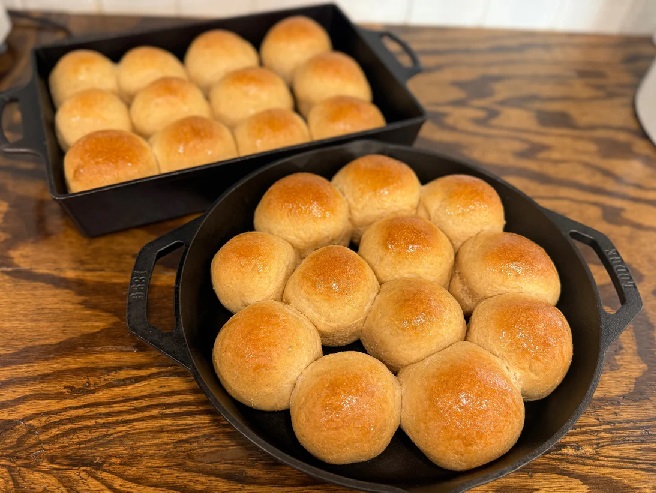
Soft, Fluffy Whole Wheat Rolls Made from Freshly Ground Wheat
There’s something deeply satisfying about baking bread from flour you milled yourself. The aroma is richer, the flavor is fuller, and the nutrition is unmatched. These Fresh Milled Flour Dinner Rolls are soft, fluffy, slightly sweet, and perfect for weeknight dinners or holiday feasts.
If you’ve recently started milling your own wheat berries at home, this recipe will quickly become a staple in your kitchen. It’s designed specifically for 100% fresh milled flour — no white flour needed — and still delivers beautifully light and tender rolls.
Why Bake with Fresh Milled Flour?
Fresh milled flour is flour that has been ground from whole wheat berries just before baking. Unlike store-bought flour, which can sit on shelves for months, freshly milled flour retains:
-
The bran
-
The germ
-
Natural oils
-
Vitamins and minerals
-
Fresh wheat flavor
When flour is commercially processed, the bran and germ are often removed to extend shelf life. This reduces both nutrition and flavor. Fresh milling keeps everything intact, giving you:
-
Higher fiber content
-
More B vitamins
-
Better mineral retention
-
A nutty, slightly sweet taste
The result? Dinner rolls that are not only soft and fluffy but also deeply nourishing.
Best Wheat for Fresh Milled Dinner Rolls
Choosing the right wheat berry makes a big difference in texture and flavor.
Hard White Wheat
-
Lighter flavor
-
Softer texture
-
Ideal for fluffy dinner rolls
Hard Red Wheat
-
Slightly heartier taste
-
More pronounced wheat flavor
-
Great for rustic rolls
If you want ultra-soft rolls that resemble classic white dinner rolls, hard white wheat is the best choice.
Ingredients for Fresh Milled Flour Dinner Rolls
-
4 cups (480g) freshly milled hard white or hard red wheat flour
-
1¼ cups (300ml) warm milk (about 38°C / 100°F)
-
2¼ teaspoons (1 packet) active dry yeast
-
¼ cup (50g) honey or sugar
-
1 large egg
-
¼ cup (60g) melted butter or oil
-
1½ teaspoons salt
-
1–3 tablespoons additional flour (if needed)
Step-by-Step Instructions
Step 1: Activate the Yeast
In a large bowl, combine warm milk and honey (or sugar). Sprinkle yeast on top and let sit for 5–10 minutes until foamy.
If it doesn’t foam, your yeast may be expired or the milk too hot.
Step 2: Mix the Dough
Add:
-
Fresh milled flour
-
Egg
-
Melted butter
-
Salt
Mix until a shaggy dough forms. Because fresh milled flour absorbs liquid more slowly, allow the dough to rest for 5–10 minutes before deciding if more flour is needed.
Step 3: Knead Properly
Knead by hand for 8–10 minutes or use a stand mixer for 6–8 minutes.
The dough should be:
-
Smooth
-
Elastic
-
Slightly tacky
-
Soft but not sticky
Avoid adding too much flour — fresh milled flour needs time to hydrate.
Step 4: First Rise
Place dough in a lightly greased bowl. Cover and let rise in a warm spot for 60–90 minutes or until doubled in size.
Fresh milled dough may take slightly longer to rise due to the bran content.
Step 5: Shape the Rolls
Punch down dough gently. Divide into 12–15 equal portions.
Shape each piece into a smooth ball by pulling the edges under and creating surface tension.
Place in a greased 9×13-inch baking dish.
Step 6: Second Rise
Cover and allow rolls to rise for 30–45 minutes until puffy and touching.
Step 7: Bake
Preheat oven to 180°C (350°F).
Bake for 18–22 minutes until tops are golden brown and internal temperature reaches about 190°F (88°C).
Brush with melted butter immediately after baking for extra softness and shine.
Tips for Soft and Fluffy Fresh Milled Rolls
1. Autolyse Method
Let flour and liquid rest together for 10–15 minutes before kneading. This improves hydration and texture.
2. Don’t Over-Flour
Fresh milled flour continues absorbing liquid as it rests. Add flour gradually.
3. Add Vital Wheat Gluten (Optional)
If your wheat is lower protein, add 1 tablespoon vital wheat gluten for better structure.
4. Use Warm, Not Hot Liquids
Too hot can kill yeast; too cool slows rise.
How Fresh Milled Flour Changes Texture
Because the bran is present, fresh milled flour dough behaves differently:
-
Slightly denser feel
-
More moisture retention
-
Fuller wheat flavor
-
Golden interior crumb
However, when kneaded properly and allowed full rise time, you can still achieve soft, fluffy dinner rolls.
Flavor Variations
Honey Butter Rolls
Increase honey to ⅓ cup and brush tops with honey butter.
Garlic Herb Rolls
Mix 1 teaspoon garlic powder and dried herbs into dough.
Cheesy Whole Wheat Rolls
Fold in ½ cup shredded cheddar or mozzarella.
Sweet Cinnamon Rolls
Add 1 teaspoon cinnamon and a touch more honey for lightly sweet breakfast rolls.
Make-Ahead Instructions
Overnight Refrigerator Method
After shaping rolls, cover tightly and refrigerate overnight.
Bring to room temperature and allow to rise before baking.
Freezing the Dough
Shape rolls and freeze on tray. Transfer to freezer bag once solid.
Thaw, rise, and bake as usual.
Freezing Baked Rolls
Cool completely, wrap tightly, and freeze up to 2 months.
Storage Instructions
Room Temperature:
Store in airtight container for 2–3 days.
Refrigerator:
Up to 5 days (reheat before serving).
Freezer:
Up to 2 months.
To reheat:
Microwave for 10–15 seconds or warm in oven at 300°F (150°C).
Nutrition Information (Per Roll – Based on 12 Rolls)
Approximate values:
-
Calories: 185 kcal
-
Carbohydrates: 29g
-
Protein: 6g
-
Fat: 5g
-
Saturated Fat: 2g
-
Fiber: 4g
-
Sugar: 5g
-
Sodium: 210mg
Nutrition varies based on ingredients and portion size.
Because these rolls are made with 100% whole wheat from fresh milled flour, they contain significantly more fiber and micronutrients than white dinner rolls.