
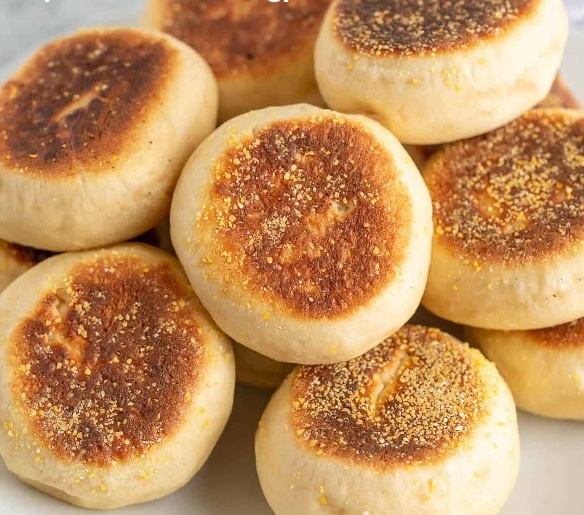
Homemade English Muffins Recipe
Soft, Fluffy, and Full of Nooks & Crannies
Homemade English muffins are one of those classic bakery items that taste so much better when made from scratch. Light, fluffy, and packed with those iconic nooks and crannies, these muffins toast beautifully and soak up butter, honey, or jam like a dream. Once you try making English muffins at home, you may never go back to store-bought again.
Unlike regular bread, English muffins are traditionally cooked on a stovetop or griddle instead of baked in an oven. This method gives them their signature texture and golden exterior while keeping the inside soft and airy. The good news? You don’t need any special equipment or advanced baking skills to make them.
This homemade English muffins recipe uses simple pantry ingredients and delivers consistently delicious results. Whether you enjoy them toasted for breakfast, layered into breakfast sandwiches, or frozen for meal prep, these muffins are a must-try.
Why Make Homemade English Muffins?
Making English muffins at home comes with several advantages:
-
Fresher taste and softer texture
-
No preservatives or artificial ingredients
-
Budget-friendly and customizable
-
Perfect for freezing and batch cooking
-
Ideal for breakfast sandwiches or toast
Store-bought English muffins can be dry or overly dense, but homemade ones are tender, flavorful, and incredibly satisfying.
Ingredients for Homemade English Muffins
You only need a handful of basic ingredients to make this recipe:
-
2 ¼ teaspoons instant yeast (1 packet)
-
1 tablespoon sugar
-
¾ cup warm milk (about 110°F / 43°C)
-
2 tablespoons melted butter or neutral oil
-
1 teaspoon salt
-
2 ½ cups all-purpose flour
-
Cornmeal or semolina, for dusting
How to Make Homemade English Muffins
Step 1: Activate the Yeast
In a large bowl, combine the warm milk, sugar, and yeast. Stir gently and let the mixture rest for 5–10 minutes, until it becomes foamy. This indicates the yeast is active and ready to use.
Step 2: Make the Dough
Add the melted butter and salt to the yeast mixture. Gradually add the flour, mixing until a soft and slightly sticky dough forms. The dough should be pliable, not dry.
Step 3: First Rise
Cover the bowl with a clean kitchen towel or plastic wrap. Let the dough rise in a warm place for 1 to 1½ hours, or until doubled in size. This rise helps develop flavor and structure.
Step 4: Shape the Muffins
Transfer the dough to a lightly floured surface. Gently roll it out to about ¾-inch thickness. Cut circles using a biscuit cutter or the rim of a glass. Lightly dust both sides of each muffin with cornmeal or semolina.
Step 5: Second Rest
Place the shaped muffins onto a tray, cover loosely, and let them rest for 20–30 minutes. This step is essential for achieving the classic English muffin texture.
Step 6: Cook on the Stovetop
Heat a non-stick skillet or griddle over low to medium-low heat. Cook the muffins for 6–8 minutes per side until golden brown and fully cooked through. Keep the heat low to prevent burning before the center cooks.
Step 7: Cool and Split
Allow the muffins to cool completely on a wire rack. Once cooled, split them open using a fork instead of a knife to preserve the nooks and crannies.
Tips for Perfect English Muffins
-
Use low heat for even cooking
-
Avoid pressing the muffins while cooking
-
Fork-splitting improves texture
-
Let muffins cool fully before slicing
-
If browning too quickly, reduce heat
English Muffin Variations
Whole Wheat English Muffins
Replace half of the all-purpose flour with whole wheat flour for a heartier muffin.
Sourdough English Muffins
Substitute ½ cup of milk with active sourdough starter for extra flavor.
Dairy-Free English Muffins
Use plant-based milk and oil instead of butter.
Sweet English Muffins
Add cinnamon and an extra tablespoon of sugar for a lightly sweet version.
How to Serve English Muffins
English muffins are incredibly versatile and can be enjoyed in both sweet and savory ways:
-
Toasted with butter and jam
-
Egg, cheese, and sausage breakfast sandwiches
-
Peanut butter and banana slices
-
Avocado, olive oil, and chili flakes
-
Mini pizzas or open-faced sandwiches
Storage and Freezing Instructions
-
Store at room temperature for up to 2 days
-
Refrigerate for up to 5 days
-
Freeze for up to 3 months
-
Toast directly from frozen for best results
To freeze, split the muffins first, then store them in an airtight container or freezer bag.
Nutrition Information (Per 1 English Muffin – Approximate)
| Nutrient | Amount |
|---|---|
| Calories | 160 kcal |
| Carbohydrates | 28 g |
| Protein | 5 g |
| Fat | 4 g |
| Saturated Fat | 2 g |
| Fiber | 1 g |
| Sugar | 2 g |
| Sodium | 220 mg |
Nutrition values are estimates and may vary based on ingredients and portion size.
Frequently Asked Questions
Why are English muffins cooked on a skillet?
Traditional English muffins are griddle-cooked, which creates their unique texture and flat shape while keeping the inside soft.
Why should I split English muffins with a fork?
Fork-splitting preserves the air pockets, giving you better nooks and crannies for butter and toppings.
Can I bake English muffins instead?
They are best cooked on a stovetop, but you can finish them briefly in the oven if needed to ensure they’re fully cooked.
Are homemade English muffins healthier?
Yes. Homemade versions contain fewer preservatives and can be customized for whole wheat or lower sugar options.
Final Thoughts
This homemade English muffins recipe proves that bakery-quality results are completely achievable at home. Soft on the inside, lightly crisp on the outside, and endlessly versatile, these muffins are perfect for breakfast, brunch, or meal prep.